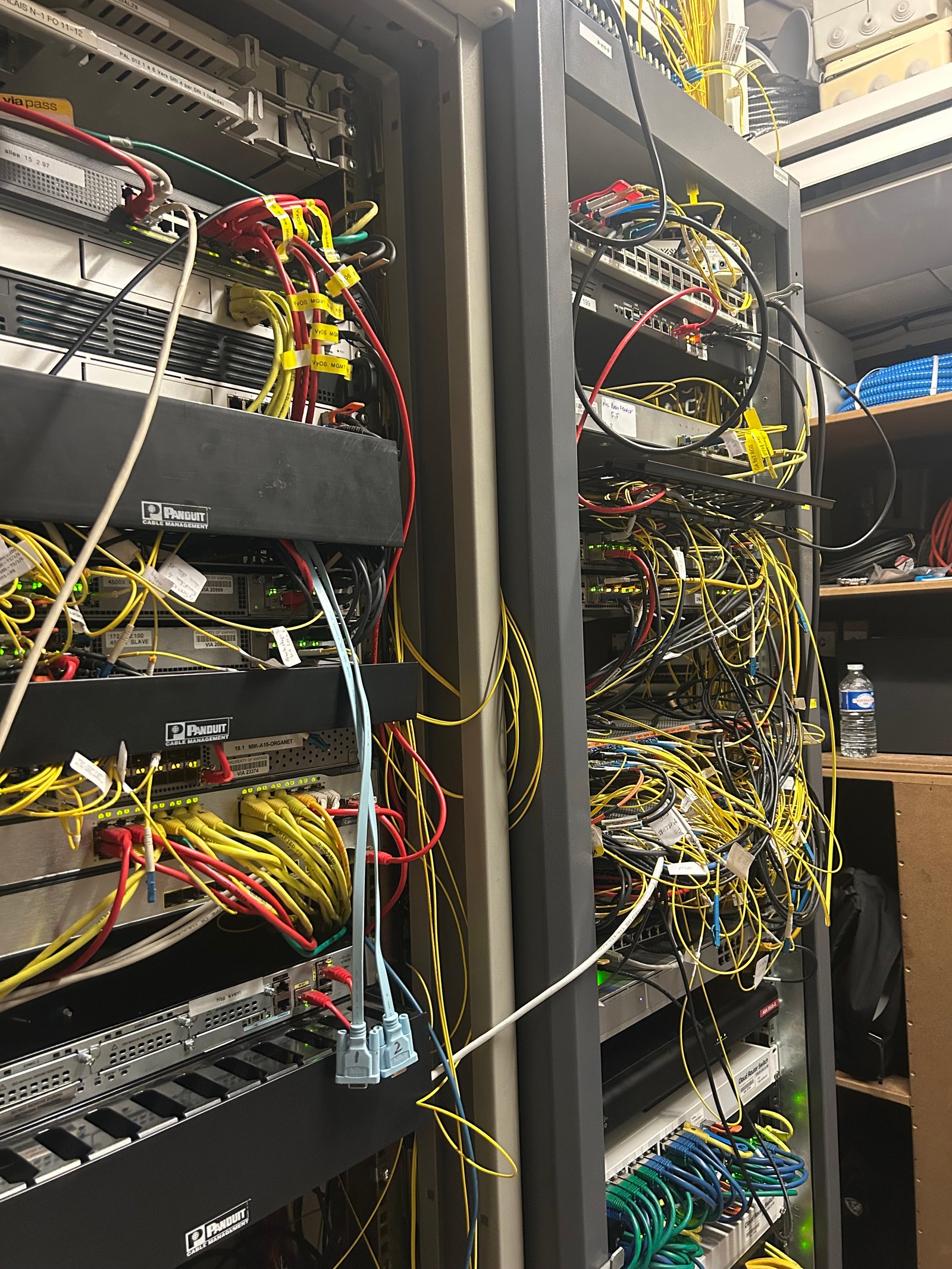
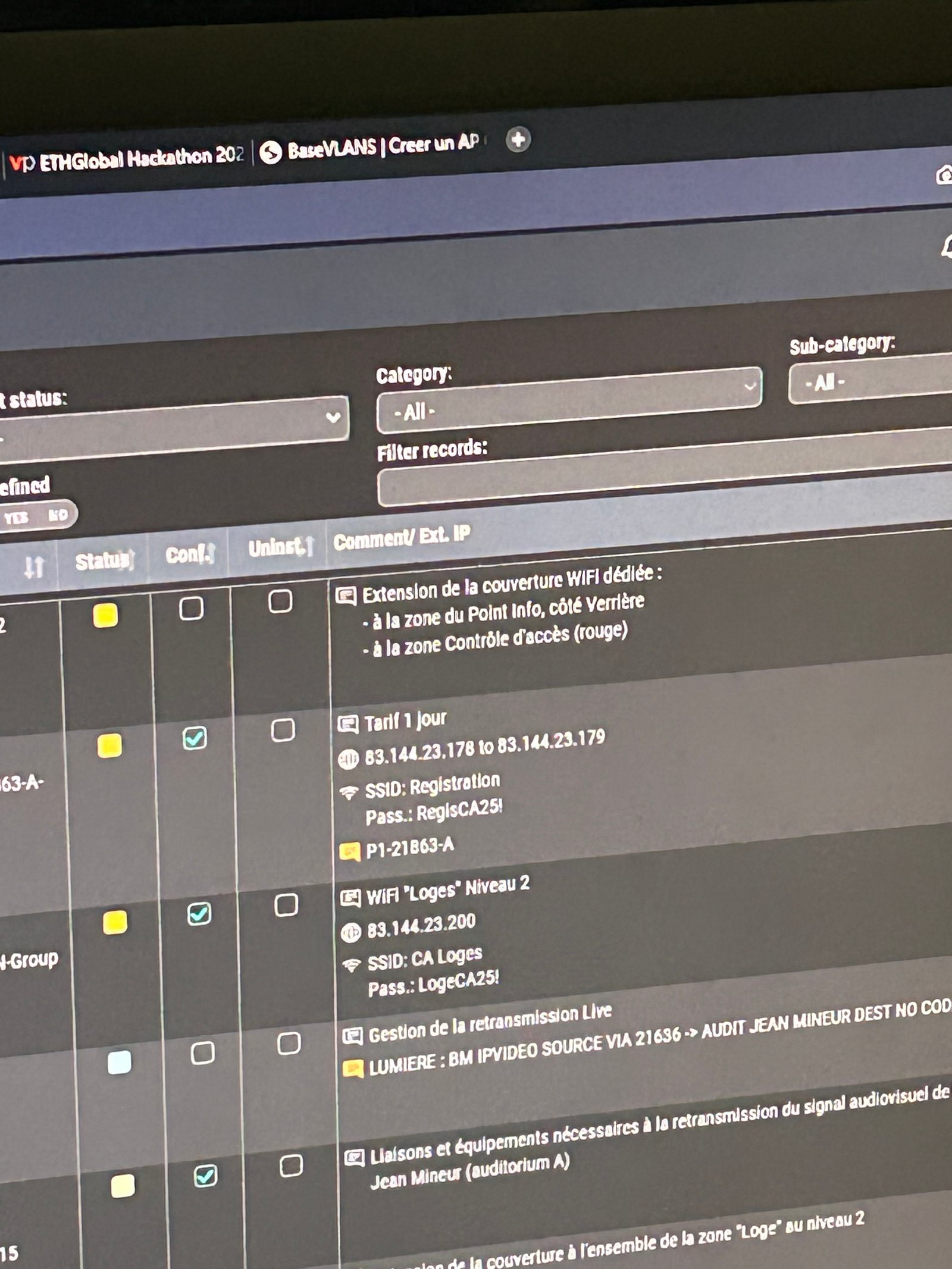
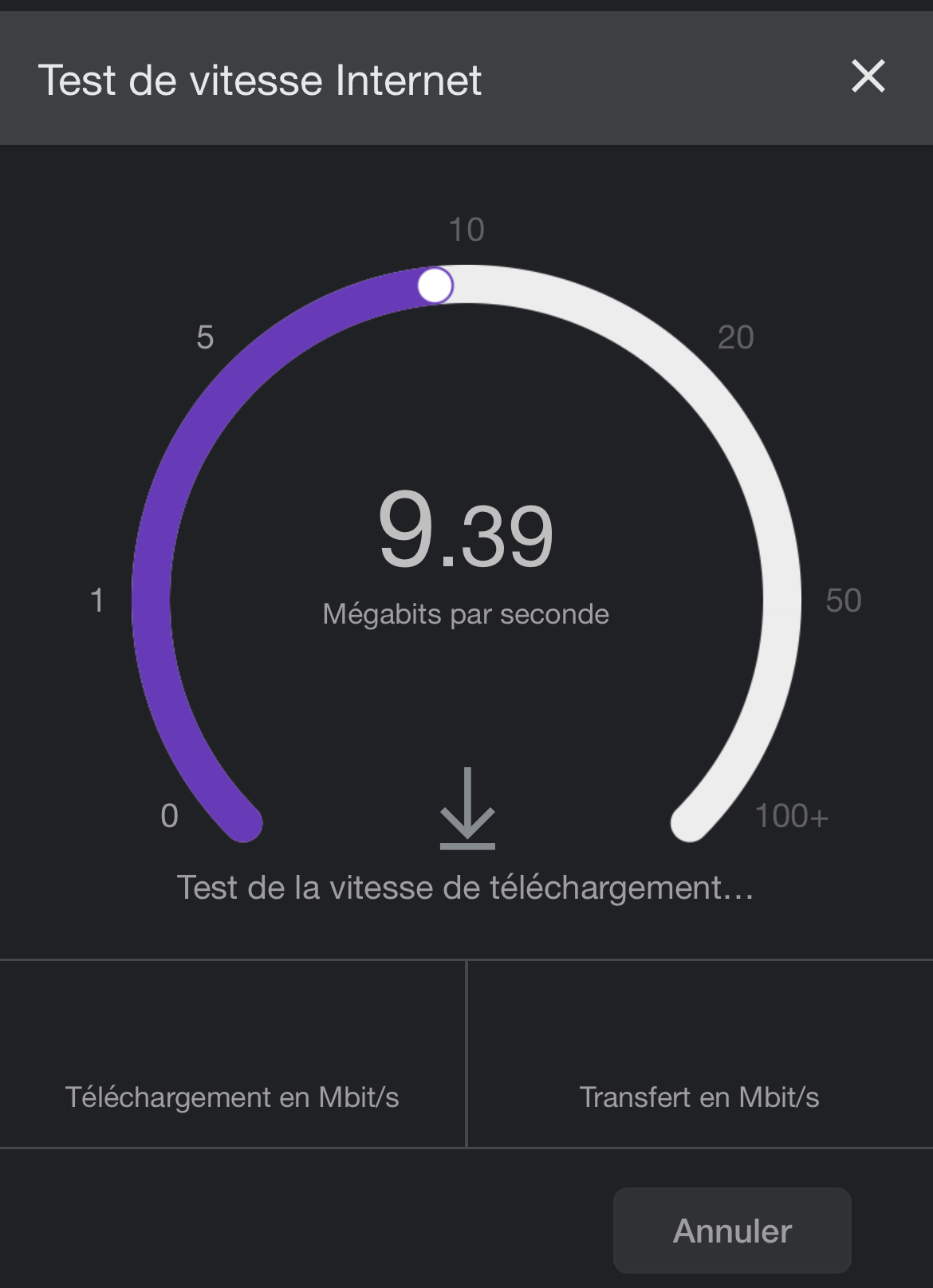
Problem 1 — Heterogeneous Maps
Multiple versions coexisted, with different legends and naming conventions, which wasted time during peak load periods.
Solutions Implemented
- Single Template: standard legend, color codes, common vocabulary.
- Homogeneous Naming: convention for zones, racks, ports, and SSIDs ("public" version).
- Process: update checklist and centralized repository.
Problem 2 — Overly Verbose Alerting
Non-actionable alerts drowned out priority incidents → risk of overlooking a true impact.
Solutions Implemented
- Sorting by Criticality and context (event vs. non-event).
- Thresholds reviewed and creation of a readable **"Synthesis View"**.
- **Low-level logs** separated to avoid polluting the executive view.
Problem 3 — Field ↔ NOC Gateway
Field reports were not always structured (who/what/where/when), slowing down diagnosis.
Solutions Implemented
- Mandatory Minimal Ticket: who/what/where/when + photo/port if useful.
- **Briefing** before opening & **Debriefing** 10 min at the end of the day.
- **Synthetic Post-Mortem** (root cause, 1–3 actions).
Indicators to Monitor (Generic)
- **Availability** & load per zone (peaks, troughs, Day J trends).
- **Wi-Fi**: RSSI/SNR, median throughput, association/failure rates.
- **Ticketing**: completeness of fields, time until first diagnosis.
Confidentiality: sensitive information (public IPs, SSIDs, identifiers) are anonymized or reformulated.